


A Nonprofit Scientific Research Institute

CCI develops technologies and governance frameworks for severe atmospheric risks, from accelerating climate change to volcanic and asteroid impact catastrophes

Our emphasis is on breakthrough contingency capabilities studied in the public interest

Our Mission
We research technologies to reduce risks from severe atmospheric disruptions, whether caused by human activity or by nature. Our focus is on novel, game-changing capabilities for delivering material to and monitoring the stratosphere. We publish our research and disseminate information for informed decision-making and development of governance policies.
Read the full mission and vision
Current Programs

Four Research Programs. One Shared Goal.

View All Programs
Delivery
01 Stratospheric Delivery

Skypipe: Ground-Based Stratospheric Delivery

Developing a general-purpose platform for delivering material from the ground to the stratosphere, with applications spanning climate contingency, volcanic winter response, and atmospheric monitoring.

Explore Stratospheric Delivery

Brightening
02 Marine Cloud Brightening

Marine Cloud Brightening

Exploring MCB's potential to increase marine cloud reflectivity through seawater aerosol injection, building on the pioneering work of Professor Stephen Salter and leveraging cross-disciplinary expertise in fluid dynamics and thermal sciences.

Explore MCB Research
Response
03 Catastrophic Event Response

Volcanic and Impact Winter Countermeasures

Investigating whether stratospheric delivery capability could provide technological responses to catastrophic atmospheric events, including volcanic winters, asteroid impact, and large-scale volcanic CO₂ forcing.

Explore Event Response
Policy
04 Policy & Governance

Governance and Risk Assessment

Developing the technical and analytical foundations for atmospheric intervention governance, from disaster-response frameworks for volcanic emergencies to the harder institutional questions raised by SRM for anthropogenic warming.

Explore Governance Work
Our Approach

Science meets systems engineering.

We combine cross-disciplinary research with systems engineering to evaluate atmospheric contingency concepts that are scientifically grounded, operationally viable, and governable.

How we work

Interdisciplinary Research

Bridging climate science, atmospheric physics, fluid dynamics, and aerospace engineering to examine atmospheric contingency technologies at the intersection of disciplines where insight is most needed.

Systems Engineering

Applying engineering rigor to evaluate real-world feasibility, technical constraints, and operational limits, the most neglected aspects of atmospheric contingency research.

Scientific Integrity

All findings are published, peer-reviewed, and openly shared. We characterize uncertainty honestly and avoid advocacy. Evidence guides our work, not outcomes.

Our Commitments

How we work, and why it matters.

Open Source

All research data, methods, and findings are published openly. No proprietary barriers. Public-interest science requires public access.

Governance-First

No atmospheric intervention research can be responsible without parallel governance development. We treat policy accountability as inseparable from scientific progress.

Transparent Methods

Every methodology, assumption, and limitation is documented and disclosed. We characterize uncertainty honestly rather than overstating what we know.

No Advocacy

CCI does not advocate for deployment of atmospheric intervention technologies. We produce knowledge that enables informed decision-making, not conclusions that predetermine it.

Emissions First

Emissions reduction, adaptation, and carbon removal are the top priority. Atmospheric contingency research explores additional options, not substitutes for the critical work already required.

Public-Interest Research

Our work is funded and conducted in the public interest. No commercial applications. No proprietary advantage. Just the knowledge humanity may need.

What CCI stands for.

CCI does not advocate for deployment of atmospheric intervention technologies. We support emissions reduction, adaptation, and carbon removal as the first and most important responses to climate change.

Our work extends beyond anthropogenic warming. The atmosphere faces catastrophic risks from volcanic eruptions, asteroid impact, and natural CO₂ forcing events, scenarios that currently have no technological response pathway. CCI studies contingency technologies for the full range of severe atmospheric risks, so that society can better understand what may or may not be technically feasible, safe, governable, and appropriate.

CCI is committed to open science, transparency, accountability, independent review, and governance-first research. We believe powerful atmospheric technologies must be evaluated carefully before crisis conditions force rushed decisions.

Founding Team

Built by scientists and engineers.

Meet the full team
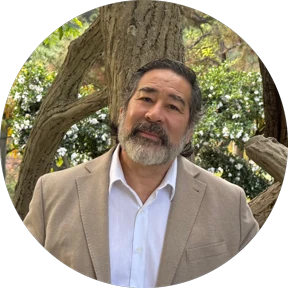
Tom Jackson

Tom Jackson

Founder & Chief Scientist

Tom brings a multidisciplinary record of technical leadership, research, and innovation to his role as founder. He previously founded an R&D company and served as Principal Investigator on National Science Foundation and commercial research programs. His work included patenting and manufacturing aircraft components and authoring more than a dozen peer-reviewed papers. In 2006, he shifted focus to mission assurance for U.S. government space launches. Tom served as a Northrop Grumman Technical Fellow and Senior Principal Engineer across multiple technical disciplines. He led mission assurance activities on SpaceX government launches since 2006 and supported various "gray beard" expert technical panels, including the USAF Space and Missile Systems Center (SMC) Independent Readiness Review Team (IRRT), a specialized elite advisory body tasked with the final technical verification of national security space launch missions. In 2024, Tom turned his attention to applying aerospace technology to climate challenges.

Qiong Jackson

Qiong Jackson

Co-founder & Funder

Qiong holds two Masters degrees (Physics and Mechanical Engineering) and a PhD in Electrical and Computer Engineering from Purdue (1996). Her Masters research advanced simulation of high power microwave fields for both industrial and medical applications. Her PhD was focused on machine learning for hyperspectral satellite imagery analysis. She served 14 years as technical lead and management developing space-based sensors at Northrop Grumman Space Systems, where she was a Technical Fellow. In 2016 she shifted focus to finance, becoming a licensed financial advisor and certified financial planner. She is now owner of a rapidly growing financial services and wealth management company with nine figures under management. Her philanthropic support has enabled the formation of CCI.

Support CCI

Philanthropy can help build the research capacity responsible atmospheric contingency planning requires.

CCI has completed Preliminary Feasibility Reviews on its initial research programs and is seeking support to expand scientific, engineering, and governance capacity.