
Contingency science
for atmospheric risks.
We research technologies to reduce risks from severe atmospheric disruptions, whether caused by human activity or by nature. Our focus is on novel capabilities for delivering material to and monitoring the stratosphere, with applications spanning climate contingency, volcanic and impact winter response, and atmospheric risk assessment. We publish our research and disseminate information for informed decision-making.

Our vision is a world prepared with credible contingency options before atmospheric crises become irreversible. Global warming is accelerating and may cross tipping points that trigger abrupt, self-reinforcing change. Volcanic eruptions and asteroid impacts could produce sudden, severe atmospheric disruptions with no existing technological response. Humanity may need contingency capabilities beyond emissions reduction, adaptation, and carbon removal.
Atmospheric contingency technologies could expand the set of options available in a crisis, but only if their operational feasibility, limits, risks, and uncertainties are understood through rigorous, transparent research. We will contribute public-interest knowledge needed to characterize hazards, improve evaluation and monitoring, and support the development of robust governance, so that if these technologies are ever considered, decisions are informed by science and accountability rather than made in the dark or under crisis pressure.
What CCI stands for.
We support emissions reduction, adaptation, and carbon removal as the first and most important responses to climate change. Atmospheric contingency research explores additional options, not substitutes for the critical work already required.
Our work spans the full range of severe atmospheric risks: accelerating anthropogenic warming, volcanic winters, impact winters, and volcanic CO₂ forcing. We study contingency technologies so that society can better understand what may or may not be technically feasible, safe, governable, and appropriate.
CCI is committed to open science, transparency, accountability, independent review, and governance-first research. We believe powerful atmospheric technologies must be evaluated carefully before crisis conditions force rushed decisions. CCI does not advocate for deployment of atmospheric intervention technologies.
"The Institute exists to advance technological contingencies against scenarios of severe atmospheric disruption, whether from accelerating climate change, volcanic catastrophe, or asteroid impact. It develops capability; it does not advocate deployment. Its purpose is to ensure that, should the world ever face a choice among grave options, that choice is better informed and better equipped. Our mission is not to make that choice, and not to hasten the day it must be made."
The Institute affirms that reducing emissions is the primary obligation and the primary remedy, and that no capability it develops is a substitute for it. Any such capability is conceived only as a possible complement to mitigation, adaptation, and carbon removal, never as a reason to relax the effort to stop causing the harm at its source.
"The only circumstance in which CCI would regard deployment for planetary cooling as justified is one in which mitigation has failed, grave harm is imminent or underway, and every available response, including inaction, is severely bad. In such a circumstance the capability might be the least bad option; but it would then be justified as a tragic necessity, not as a demand of justice, and the Institute does not claim the standing to make that judgment alone."
Science meets systems engineering.
Interdisciplinary Frontiers
CCI pursues opportunities for advancement by working at the intersection of disciplines that rarely collaborate on atmospheric problems: fluid dynamics, thermodynamics, structural engineering, heat transfer, materials science, and power systems. By bringing these fields together in the service of atmospheric contingency, we uncover new design spaces, challenge conventional assumptions, and create opportunities for breakthroughs that no single discipline could achieve alone.
Systems Engineering Applied to Climate Science
We bring systems-engineering rigor to the evaluation of atmospheric contingency concepts, asking not only whether they are scientifically plausible, but whether they can be made operationally feasible, monitorable, and governable. This requires examining deployment constraints, failure modes, safety margins, and real-world limits that laboratory research alone cannot resolve.
Scientific Integrity & Peer Review
We submit our findings for peer review and publish them openly. We document uncertainties, disclose limitations, and avoid overstating conclusions. Our work is made available for scientific and public scrutiny, so others can examine, test, and challenge it.
Built by scientists and engineers.
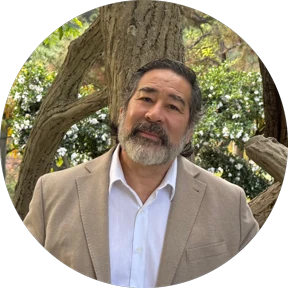
Tom Jackson
Founder & Chief ScientistTom brings a multidisciplinary record of technical leadership, research, and innovation to his role as founder. He previously founded an R&D company and served as Principal Investigator on National Science Foundation and commercial research programs. His work included patenting and manufacturing aircraft components and authoring more than a dozen peer-reviewed papers. In 2006, he shifted focus to mission assurance for U.S. government space launches. Tom served as a Northrop Grumman Technical Fellow and Senior Principal Engineer across multiple technical disciplines. He led mission assurance activities on SpaceX government launches since 2006 and supported various "gray beard" expert technical panels, including the USAF Space and Missile Systems Center (SMC) Independent Readiness Review Team (IRRT), a specialized elite advisory body tasked with the final technical verification of national security space launch missions. In 2024, Tom turned his attention to applying aerospace technology to climate challenges.

Qiong Jackson
Co-founder & FunderQiong holds two Masters degrees (Physics and Mechanical Engineering) and a PhD in Electrical and Computer Engineering from Purdue (1996). Her Masters research advanced simulation of high power microwave fields for both industrial and medical applications. Her PhD was focused on machine learning for hyperspectral satellite imagery analysis. She served 14 years as technical lead and management developing space-based sensors at Northrop Grumman Space Systems, where she was a Technical Fellow. In 2016 she shifted focus to finance, becoming a licensed financial advisor and certified financial planner. She is now owner of a rapidly growing financial services and wealth management company with nine figures under management. Her philanthropic support has enabled the formation of CCI.
CCI has been funded through philanthropy of the Jackson family for 2 years. Now that our first research programs have passed Preliminary Feasibility Review milestones we are looking to grow our scientific/engineering staff and will seek outside grants.
Additional funders and partners will be listed here as relationships are confirmed.
Support CCI