Marine Cloud Brightening
Exploring how precision seawater aerosol injection can increase marine cloud reflectivity, building on the pioneering engineering of Professor Stephen Salter.
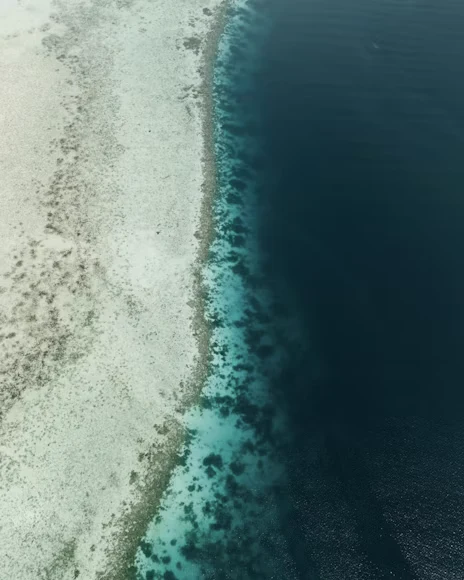
MCB increases the reflectivity of certain marine clouds by adding very fine seawater droplets that increase the number of cloud condensation nuclei. More numerous, smaller droplets produce brighter clouds that reflect more sunlight. The approach has applications from broad-area climate contingency to targeted protection of vulnerable ecosystems such as coral reefs.
CCI's approach to climate contingency research was inspired by the late Professor Stephen Salter of the University of Edinburgh. For over a decade after John Latham proposed MCB in 1990, the idea sat in the literature as a theoretical curiosity, sound in physics but without traction. In 2008, Salter published a design for wind-driven spray vessels using Flettner rotors and precision nozzles, and the field transformed. Within a few years, major modeling groups were simulating MCB, collaborative research programs were funded across multiple countries, and the concept entered serious policy discussion.
Salter demonstrated that a concrete engineering concept can catalyze an entire discipline. His spray technology is now being tested on Australia's Great Barrier Reef as a countermeasure against coral bleaching. CCI follows Salter's example: we believe that providing the research community with specific, evaluable engineering concepts is one of the most valuable contributions a small institute can make.
The principal engineering challenge remains generating droplets at the target diameter of roughly 0.8 µm, efficiently and at the scale required for regional or global effect. CCI leverages cross-disciplinary expertise in fluid dynamics and thermal sciences to explore breakthrough possibilities in aerosol generation.
- Aerosol generation mechanisms for ultra-fine seawater droplets
- Fluid dynamics and thermal sciences applied to droplet physics
- Cloud microphysics interaction characterization
- Efficiency evaluation and engineering constraint mapping
- Environmental risk and monitoring framework development
The MCB program has passed its Preliminary Feasibility Review. CCI is seeking expanded cross-disciplinary engineering capacity to advance particle generation research.
Support this research